Item 10. Provisional agenda for the seventieth session of the Commission
Chair: We will turn to consideration agenda item 10. The draft provisional agenda for the 70th session was considered during this meeting and the chair of original groups were requested to hold consultations with memberships. Are all members of the commission ready to vote?
United States: We object to the title of item 9. As proposed it refers to the 2030 agenda for sustainable development and we have concerns with it. Instead of it we support the focus, follow up and review of the core mandates of CND to ensure it’s delivering its mission of combating evolving complex and global crime related threats. We propose an amendment to delete that part to reaffirm the commission core mandate and properties. We ask for this statement to be reflected on the records
Chair: It will be done. Secretariat please project the oral amendment on the screen. According to rule 64 the commission will take a decision on the amendment. Does the commission adopt this amendment?
Slovenia: On behalf of Slovenia and all other member states from the EU. We do not approve this deletion. We believe CND should be committed to working with all partners to accelerate projet towards sustainable development goals and we reiterate our commitment to implementation of 2030 agenda for sustainable development.
South Africa: We align with the statement from Slovenia. Reject amendment and believe agenda item should remain as it has been for a long time.
United States: We would like to call a vote
Chair: We will now vote on the oral amendment. In accordance with rule 61 no representative can interrupt the voting unless with a point of order in connection with the voting itself. Members should cast an affirmative or negative vote, those who abstain will count as not voting.
In Favour: Argentina and United States
Against: Armenia, Australia, Austria, Belgium, Burkina Faso, Chile, China, Colombia, Côte d’Ivoire, Dominican Republic, France, Finland, Germany, Guatemala, Honduras, Hungary, Indonesia, Italy, Kazakhstan, Kenya, Kyrgyzstan, Lithuania, Malta, Mexico, Morocco, Netherlands (Kingdom of the), Nigeria, Pakistan, Peru, Poland, Portugal, Qatar, Singapore, Slovenia, South Africa, Spain, Switzerland, Thailand, Ukraine, United Arab Emirates, United Kingdom of Great Britain and Northern Ireland, United Republic of Tanzania, Uruguay, Zimbabwe
Abstentions: India, Japan, Bolivia
Chair: Thank you. 2 in favor, 43 against, 3 abstentions. The commission rejected the amendment. We shall take a decision on the provisional agenda now. Are members of the commission ready to adopt the draft proposal? No objections, it is decided. Now we will consider agenda item 11.
Item 11. Other business
Mexico: Can you leave this agenda item open for the end of the session?
Chair: Thank you, I was advised by the secretariat that agenda item 11 can stay open. We will move to agenda item 12. We will come back to this before the adoption of the report.
Mexico: Thank you very much chair.
Item 12. Adoption of the report of the Commission on its sixty-ninth session
Chair: We will now proceed with the adoption of the resolutions.
Netherlands: The CoW held 6 meetings betweenMonday and Thursday where we held extensive deliberations on 5 resolutions. Atmosphere constructive and all delegations striving to achieve the best possible outcome of the session. We did not find full agreement but did improve the content of all draft proposals. We concluded our work on 12th march and submitted 5 proposals to the plenary. These have been made available online.
Chair: I request delegations to abstain from taking the floor on editorial or translation matters and instead submit these in writing. Let me recall the process of cosponsorship. Delegations can still submit cosponsorship online until COB 16th March. Countries can still raise their name plate when asked to do so. I recall the representative of financial resources explained there would only be statements of financial implications if there would be implications on the regular budget. As these are subject to availability of extra budget no oral statements on finances are needed and there are no financial implications on regular budget. According to past practice we will take up Resolutions in order they have been tabled. I call on the Secretary to introduce Res L2.
Secretary: The commission has for consideration the unedited revised version of L2, unedited revised version L3 rev 1, L4 rev 1, unedited revised version L5 and unedited revised version L6 rev 1. All have been considered by CoW but have not been formally approved. We will first consider L2 titled Measures to implement article 13 of the United Nations Convention against Illicit Traffic in Narcotic Drugs and Psychotropic Substances of 1988 to prevent the diversion of equipment and related materials used for illicit production and manufacture of drugs and sponsored by Bolivia and Mexico.
India: My delegation is constrained to call a vote on resolution 2. While seeking to introduce measures to implement art. 13 of 1988 convention, it expands into areas that are not in accordance with the objectives of the mandate of CND. CND has proceeded on the basis of a balanced approach and this is obtained not just between various approaches we adopt to address the world drug problems but between the need to counter production, manufacturing and trafficking of illicit narcotics and ensure availability for medical and health uses. The current resolution could impact production and supply of medical products and increase cost without benefits. OP4 and other sub provisions go beyond the mandate of commission as well as INCB. INCB does not have mandate or capacity to engage in monitoring and controlling trade in equipment necessary for manufacturing listed products for medical and nonmedical uses.
Chair: Are you limiting to this statement or asking for procedural motion?
India: I ask for a vote
Mexico: I would like to ask India, since you mentioned OP4, we wouldn’t mind the vote being on OP4 and depending on result we continue with approval by consensus
India: We thank Medico but we believe overall drafting is not acceptable to us and many delegations of this commission have been in CoW and address the fact that diversion of equipment for illicit manufacturing does not impact illicit manufacturing.
Mexico: I’m sorry that my colleague for India does not have more objections than those expressed in OP4. out of respect by all delegations, we would like to use art. 50 and request closure of debate.
Chair: Rule 50 reads that a representative may at any time move on the closure of a debate on the item under discussion, whether or not any other rep. Has signified his wish to speak. Permission to speak on a motion shall be accorded only to two representatives opposing the closure. After this, one motion shall be put to vote immediately. If the motion is successful, the commission would proceed immediately to consider any proposals before it. Members should cast affirmative or negative vote, those abstaining are considered not voting.
In Favour: Argentina, Armenia, Australia, Austria, Belgium, Bolivia (Plurinational State of), Chile, Colombia, Dominican Republic, France, Finland, Germany, Guatemala, Honduras, Hungary, India, Indonesia, Italy, Japan, Kazakhstan, Kenya, Kyrgyzstan, Lithuania, Malta, Mexico, Morocco, Netherlands (Kingdom of the), Nigeria, Peru, Poland, Portugal, Singapore, Slovenia, South Africa, Spain, Switzerland, Thailand, Ukraine, United Arab Emirates, United Kingdom of Great Britain and Northern Ireland, United Republic of Tanzania, United States of America, Uruguay, Zimbabwe
Against: None
Abstentions: Burkina Faso, Pakistan, Côte d’Ivoire, Qatar, China
Chair: 43 in favor, 0 against, 5 abstentions. The commission decided to close the debate. Now we go back to resolution L2. A vote was requested by India under L2. I propose any statements to explain the vote or general statements are made after voting. Simple majority is required.
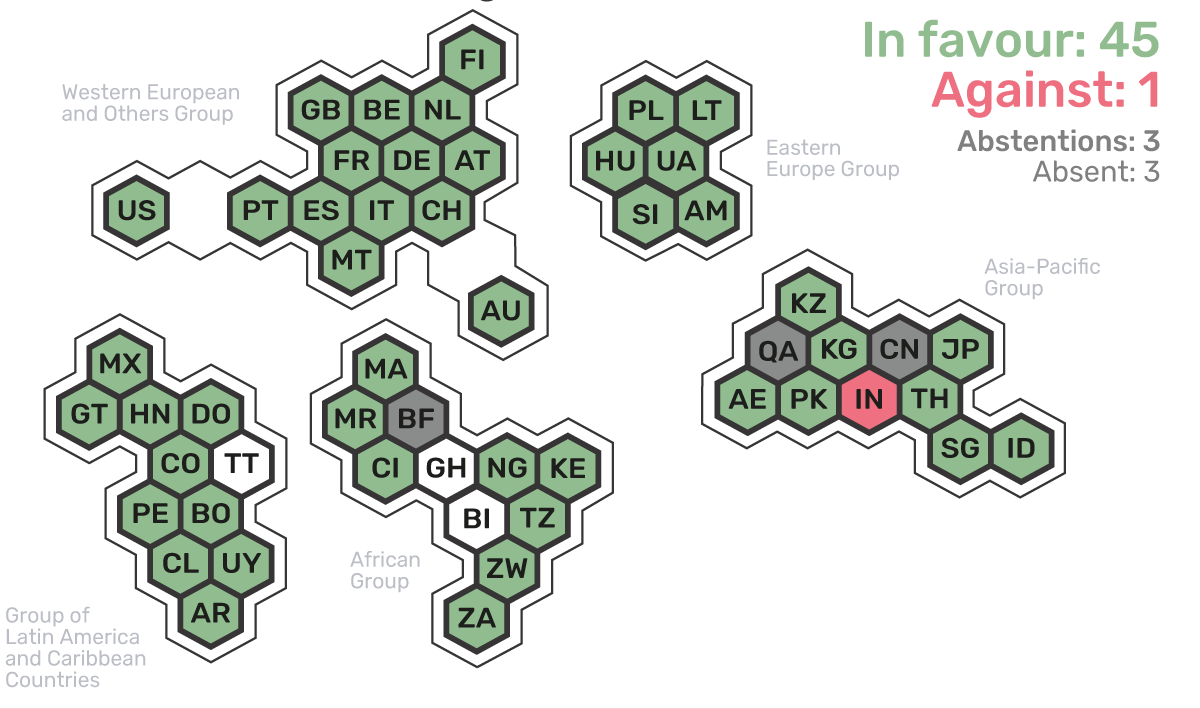
In Favour: Argentina, Armenia, Australia, Austria, Belgium, Bolivia (Plurinational State of), Chile, Colombia, Côte d’Ivoire, Dominican Republic, France, Finland, Germany, Guatemala, Honduras, Hungary, Indonesia, Italy, Japan, Kazakhstan, Kenya, Kyrgyzstan, Lithuania, Malta, Mexico, Morocco, Netherlands (Kingdom of the), Nigeria, Pakistan, Peru, Poland, Portugal, Singapore, Slovenia, South Africa, Spain, Switzerland, Thailand, Ukraine, United Arab Emirates, United Kingdom of Great Britain and Northern Ireland, United Republic of Tanzania, United States of America, Uruguay, Zimbabwe
Against: India
Abstentions: Burkina Faso, China and Qatar
Chair: 45 in favour, 1 against and 3 abstentions. The commission adopted resolution L2.
Mexico: As a sponsor, I wish to celebrate. I wish to address 3 falsehoods. Since 1946, CND has had the mandate to deal with all questions related to drugs and oversee functioning implementation of drug conventions and tackle the resolution we just approved. 1988 convention states that member states can take measures that go beyond what is explicitly established. In this case, the resolution does not even go beyond that. It refers to cooperation with INCB. It is a lack of respect for INCB and the same is true for UNODC. I had to clarify these falsehoods and express gratitude to the INCB team and delegations who were involved in informals in good faith and those who voted in favor.
Chair: Are there any other delegations wishing to take the floor? Are there any other delegations wishing to co-sponsor?
Secretary: Finland, Japan, Norway, Albania, Portugal, France, Colombia
Chair: I call on the secretary to introduce L3
Secretary: The document L3 Enhancing supply chain integrity to prevent the criminal exploitation of licit supply chains and shipping modalities for the illicit manufacture and trafficking of narcotic drugs and psychotropic substances is sponsored by Bolivia and the USA.
Chair: I call on the commission to adopt L3.
China: Even though we think countering narcotic drugs and combating the equipment is important, this resolution has overstepped the contents of the convention and there are some important potential misgivings on our side. The proposal does not stress the monitoring is to avoid the overflow of drugs. It also will impact our control efforts. The Chinese delegation calls on all countries to consider carefully the potential effects of this draft resolution on the chemical industry.
Chair: Are there any delegations wishing to take the floor? Are there any objections to the adoption of L3?
China: We believe this draft resolution is not in conformity with what I said previously.
Chair: Can I ask if this statement is enough to proceed with the adoption of this resolution?
China: Yes, thank you
Chair: Are there any other requests for the floor?
China: We call to start the voting process. We call to vote on this draft resolution. China is afraid of the risk of some of these resolutions. We agree it is important to prevent diversion of substances used in illicit manufacture and production and prevent their diversion. We support all efforts by the intl community. We have compromised again and again in previous discussions about relevant resolutions. We have achieved some consensus. We have 4 paragraphs and the title in which we have a different opinion. Controlled substances used for pain relief, only referred to in PP rather than OP there is nothing to protect legitimate interest and licit trade. OP1 has nothing considering why the implementation has been taken is aiming at preventing diversion which might bring lots of negative impact on legitimate trade and legitimate interest of stakeholders especially global food and pharma supply chains. It could be kind of use of multilateral system by several countries. We call on all member states to double think about some resolutions and potential risks. We will call a vote.
Chair: We will now proceed with voting. In accordance with rule 61 no representative may interrupt the voting except on point of order in relation to the act of voting. A simple majority of commission members present and voting is required. Members that abstain from voting are considered as not voting.
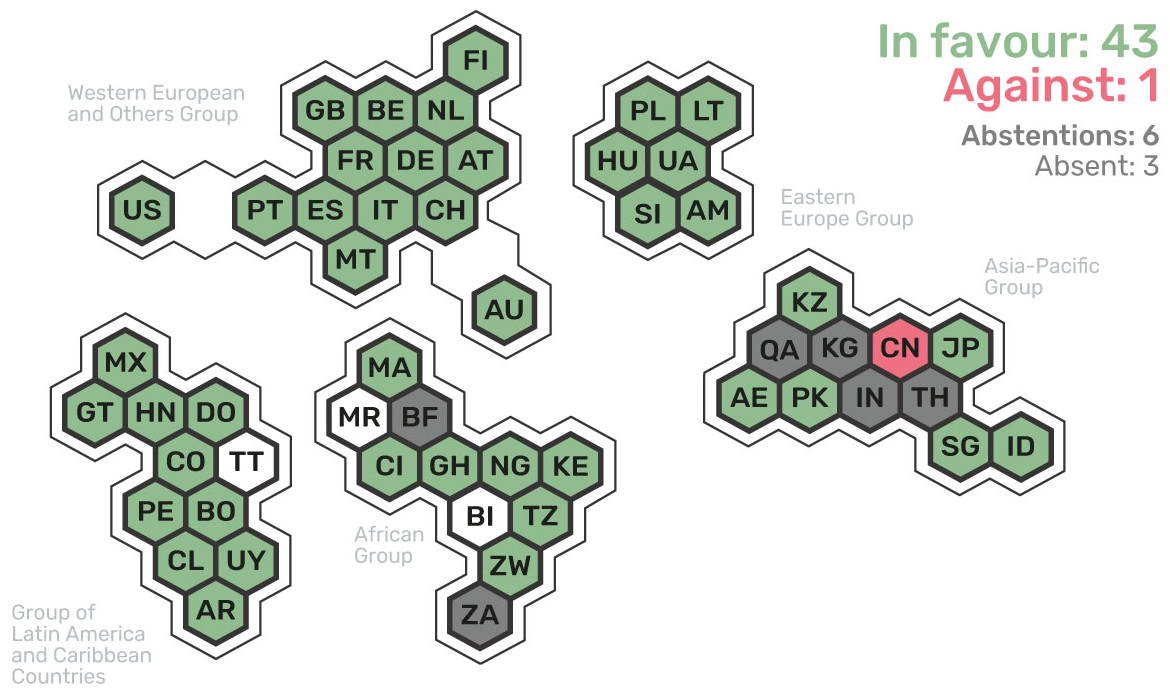
In favour: Argentina, Armenia, Australia, Austria, Belgium, Bolivia (Plurinational State of), Chile, Colombia, Côte d’Ivoire, Dominican Republic, France, Finland, Germany, Ghana, Guatemala, Honduras, Hungary, Indonesia, Italy, Japan, Kazakhstan, Kenya, Lithuania, Malta, Mexico, Morocco, Netherlands (Kingdom of the), Nigeria, Pakistan, Peru, Poland, Portugal, Singapore, Slovenia, Spain, Switzerland, Ukraine, United Arab Emirates, United Kingdom of Great Britain and Northern Ireland, United Republic of Tanzania, United States of America, Uruguay, Zimbabwe
Against: China
Abstentions: Burkina Faso, India, Kyrgyzstan, Qatar, South Africa, Thailand
Chair: 43 in favor, 1 against, 6 abstentions. Commission adopted resolution L3. Does anyone wish to make a statement?
United States: We are deeply disappointed that China decided to call a vote and was the sole country to vote “no” on what could have been an opportunity to show commitment to prevent diversion of materials and equipment used to produce synthetic drugs. We are pleased that the commission adopted a historic US sponsored resolution. For too long we allowed criminals to exploit our systems of commerce to move the poisons within and across borders. Today we took a step in changing that, but our efforts can’t stop with words on paper. All member states and the private sector need to implement what we agreed and we welcome partnerships to achieve the objectives of this resolution and stop the supply of poisons harming and killing our citizens.
France: We voted in favour because we acknowledge the importance of logistic chains in combating drugs. We note with satisfaction our priority of integrity and safety and security of ports and airports. We express disappointment concerning absence of explicit language on impact on drugs and environment. We’ve heard about poisoning. I think a resolution from last year showed language has gone back on the impact of drug related activities on the environment. We remain mobilized on that issue.
India: we are committed not only in intent but also actions in combating illicit tracking. We support the intentions of the US in introducing this resolution but we believe as we did in L2 we should be vigilant if steps taken out of this commission do not lead to compliance requirements and overregulate illicit production of substances for medical and health issues. We are living in a hard phase of production globally and regulations that further burden commercial licit activity should be taken with cognizance of systemic impact therefore we can’t endorse it.
China: We just voted against L3. We want to state that chinese government is dedicated to fight drugs and we have many measures to prevent precursors and materials and equipment are diverted. We support the international community and understand the purpose of the proposal and maintain the spirit of consensus. We made many compromises and after reviewing the parts which have not been agreed upon based on 3 conventions we should take consolidated measures to deal with the world drug problem. (…) Precursor chemicals that will affect health and safety. Strengthening supply chain should consider share of info and monitoring and these provisions do to ensure legitimate trade and proponents have rejected our proposal to remove the negative impact of legitimate ???? and the interests of stakeholders. The resolution may have a negative impact on the food and drug manufacturing industry. Third, we oppose the vague expression on sharing info and monitoring and text lacks clarity on protection of commercial secrets as well as prevent misuse of information.. This may have harms to legitimate interest and lead to the release of sensitive information. Lastly we are not rejecting cooperation but calling for more high quality and inclusive cooperation. We hope memberships understand and we want to work with everyone.
Russian Federation: We participated in the agreement of this resolution in the informals and Committee of the whole . We take measures and cooperate with parties. It is regrettable that the outcome text could have made an important contribution to strengthening regional and international efforts and unfortunately went beyond UNODC’s mandate and provisions of conventions of 61, 71 and 88. We are concerned that the draft could have a negative impact on legal trade including those used to produce vital medicines. We hope member states take this into account when implementing.
Chair: Any other delegations wishing to take the floor? I don’t see any. Any other delegations wishing to cosponsor?
Secretariat: Ukraine, Israel, Italy, Japan, Albania, Lithuania, Hungary
Chair: Next resolution. L4 rev1.
Secretariat: Indeed, the next proposal is entitled “L4. Appendix to Complement the United Nations Guiding Principles on Alternative Development” sponsored by Bolivia, Brazil, Cyprus (on behalf of the EU), Peru, Thailand, Albania, China and UK.
Chair: Can invite the commission to approve this draft resolution?
USA: We tried to work with the sponsors to come to a position where we can sponsor the draft but we are not in a position to do so, so we call for a vote.
Chair: We proceed now to vote and I ask that any statements be made afterwards. Recalling rules of procedure that no interruptions are accepted simple majority is required abstention means not voting.
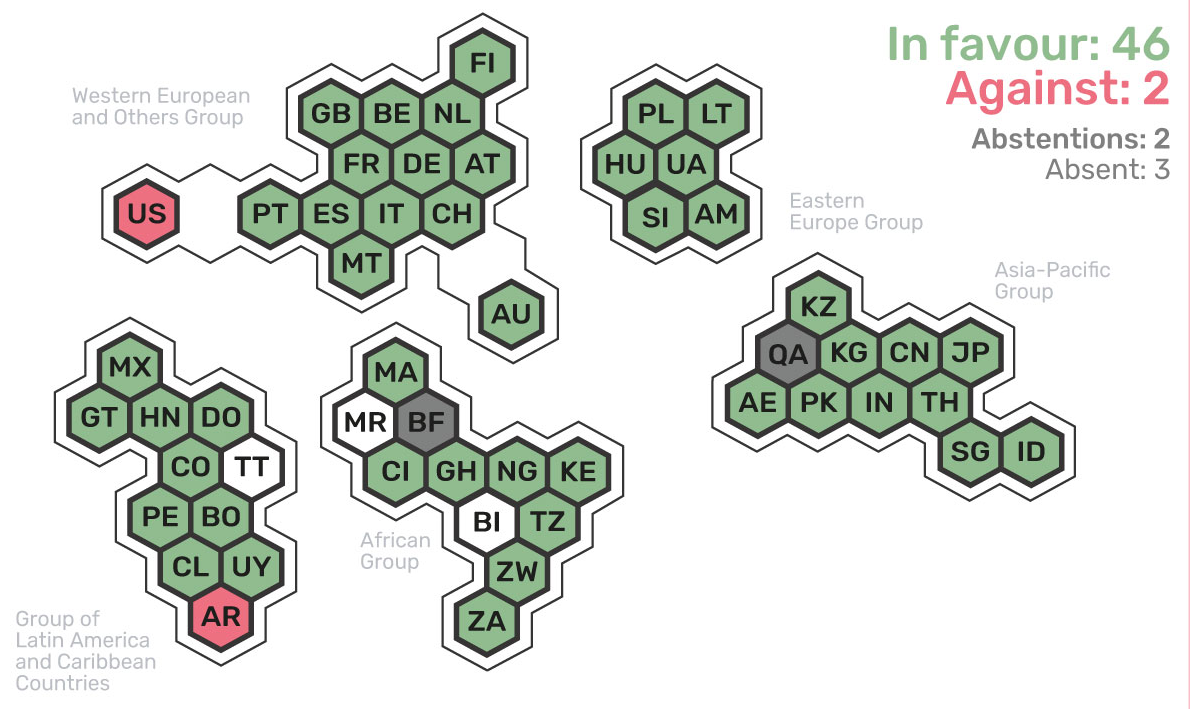
In favor: Armenia, Australia, Austria, Belgium, Bolivia (Plurinational State of), Chile, China, Colombia, Côte d’Ivoire, Dominican Republic, France, Finland, Germany, Ghana, Guatemala, Honduras, Hungary, India, Indonesia, Italy, Japan, Kazakhstan, Kenya, Kyrgyzstan, Lithuania, Malta, Mexico, Morocco, Netherlands (Kingdom of the), Nigeria, Pakistan, Peru, Poland, Portugal, Singapore, Slovenia, South Africa, Spain, Switzerland, Thailand, Ukraine, United Arab Emirates, United Kingdom of Great Britain and Northern Ireland, United Republic of Tanzania, Uruguay, Zimbabwe
Against: Argentina, USA
Abstention: Burkina Faso, Qatar
Chair: We have 46 votes in favor, 2 against, and 2 abstentions – resolution adopted. Does any delegation wish to make a statement on the vote or in general?
Thailand: We are grateful for the sponsors and champions of this resolution. We wish to pursue a balanced and comprehensive approach to drug control internationally. Thanks to all delegations supporting the adoption. This represents an important step towards AD, SDGs and inclusive development approaches. We believe that UN guiding principles as complemented by the appendix will meaningfully support our work to promote sustainable livelihoods and addressing the World Drug Problem.
USA: We recognize Thailand, Peru and Germany for their hard work. Last year we voted no on L3 that seeked to update the guiding principles. We voted no today as well for several reasons… it goes well beyond the scope of accepted alternative development and that should be directly linked to illicit crop cultivation. This resolution contains numerous controversial concepts, including gender, climate change and SDGs – we reject these references.
Germany: We warmly thank Thailand and Peru for longstanding partnership and UNODC for technical support. This is the result of an inclusive expert driven process mandated by Res 68/3. We have ensured participation of experts to ensure evidence based and transparent process. Expert Group Meeting held therefore provided substantive recommendations which are reflected in the annexed appendix. Commission operationalises guiding principles on Alternative Development with practical evidence-based guidance linked to illicit economies, evolving degradation, public security, displacement, empowerment of indigenous people and gender equality. We respect all human rights and rule of law and align with SDGs. Throughout consultations and CoW we accommodated diverse perspectives. Outcome is balanced and consistent with international law. We encourage member states to use guiding principles when designing, implementing, monitoring alternative development policies and programs. Welcome convening of the expert group on alternative development in Thailand to provide expert guidance. We stand ready to support partners through capacity building and knowledge exchange and contributing to follow up.
Peru: Today we adopt resolution not just about policies but about possibilities. For more than a decade the guiding principles on alternative development marked a significant milestone in response to the international community in response to the world drug problem. Sustainable development, dignity, inclusion should be at the centre of tackling drug problems. This led to the promise of alternative development and the promise to communities victims of marginalisation and illicit drug economies could build licit and dignified futures. As we adopt this resolution, we ratify the promise and take it into the future. Illicit drug economies have become more complex and increasingly interconnected with inequalities. The collective framework has to change. The appendix we’re adopting is a reflection of this. Alternative development has to be long term, inclusive, sustainable, and provide feasible licit economies for communities at risk from becoming involved in illicit drug economies. Design and implementation of alternative development must take into account the dignity of all people and guarantee that responses to the world drug problem can be people focused and aligned with international law. Focused on people and based on rights as we included multisectoral initiatives adopted to needs of specific communities. Highlights needs of women and girls and women as key for change and community leadership. Importance of indigenous commutes to provide sustainable and inclusive solutions. Alternative development is not a short term solution, it is long term investment and commitment to deal with structural weaknesses which have enabled the emergence of illicit economies. Commitment to response to world drug problem being balanced, comp and based on development, human rights, and common and shared responsibility. We are not just reinforcing principles but considering alternative development for the future too.
Argentina: We would like to state that regarding the word gender we understand this to refer to male and female, and the term gender has no other meaning apart from that. From this gender perspective our commitment to women’s rights is paramount and aligned with domestic law and international standards. Understanding human rights should not be split by gender and sustainable development is non binding and each state can interpret that freely.
Colombia: We welcome adoption of this resolution on alternative development and we think this can have more humane responses to the world drug problem. We thank the leadership in Vienna, Lima, and Bangkok, and the balanced approach that puts rural communities at centre. Alternative development is not a theory but a way to transform territories and provide opportunities to families who have experienced trafficking and poverty for decades. Evidence-based and comprehensive approaches focusing on markets, value chains, peasant farmers, communities of African descent, women and young people. We can now take on these complex phenomena. The aim of this resolution is clear: Member States are committing to effective, evidence based multilateralism. We will continue to work constructively with all states to progress towards alternative development. We would like to announce our cosponsorship of this resolution.
Chair: Any other delegation wishes to take the floor?
Russian Federation: We thank sponsors for presenting this resolution. We have consistently supported the concept of alternative development and replacing drug crops with agriculture. We are a donor to related projects with the UNODC. Our concern is the procedure for discussion of approval of annex. We note that our comments were taken on board by proponents but states were not provided opportunities to discuss annexes and make changes. We call proposers to ensure greater inclusivity.
European Union: I have the honour to take the floor on behalf of the EU and its Member States. We congratulate Thailand, Germany, and Peru for the adoption of the resolution entitled “Appendix to Complement the United Nations Guiding Principles on Alternative Development”, which the EU has co-sponsored on behalf of its 27 Member States. The European Union reiterates its full support for people-centred, human rights-based and development-oriented drug policies in line with international law, including human rights law. We have long supported alternative development, including through our co-sponsorship of resolution 68/3 last year, and thank the penholders for their leadership on this critical issue. Given the persistent and evolving challenges of illicit drug economies, we consider it necessary to complement the 2013 Guiding Principles. In line with EU Council Conclusions and CND resolutions, drug policies must address emerging challenges such as climate change, environmental degradation, biodiversity loss, food security, public security, displacement, and the empowerment of Indigenous Peoples, local communities, and women and girls. The Sustainable Development Goals, including gender equality, remain central to ensuring inclusive, fair, and sustainable progress. We look forward to working with partners and UNODC to implement the complemented Guiding Principles. Thank you.
Chair: Any delegations wish to cosponsor?
Secretary: Switzerland, Portugal, Singapore, Uruguay, Nigeria, China, Colombia, Japan, Ukraine, Norway, Ireland and Malaysia
Chair: we move to consideration of resolution L5
Secretary: The next text proposal has the title L5. Strengthening early warning mechanisms consisting of monitoring and assessment systems to enable effective responses to the emergence of new synthetic drugs, new psychoactive substances and precursors, including pre-precursors and designer precursors, sponsored by Burkina Faso, Kirghistan, Turkmenistan, and Uzbekistan.
Chair: Can the commission adopt this resolution?
United States: We thank the delegations for bringing forward a resolution with important goals but during negotiations we have not seen our concerns reflected in the current draft so we call for a vote.
Chair: We will now proceed with voting. In accordance with rule 61 no representative may interrupt the voting except on point of order in relation to the act of voting. A simple majority of commission members present and voting is required. Members that abstain from voting are considered as not voting.
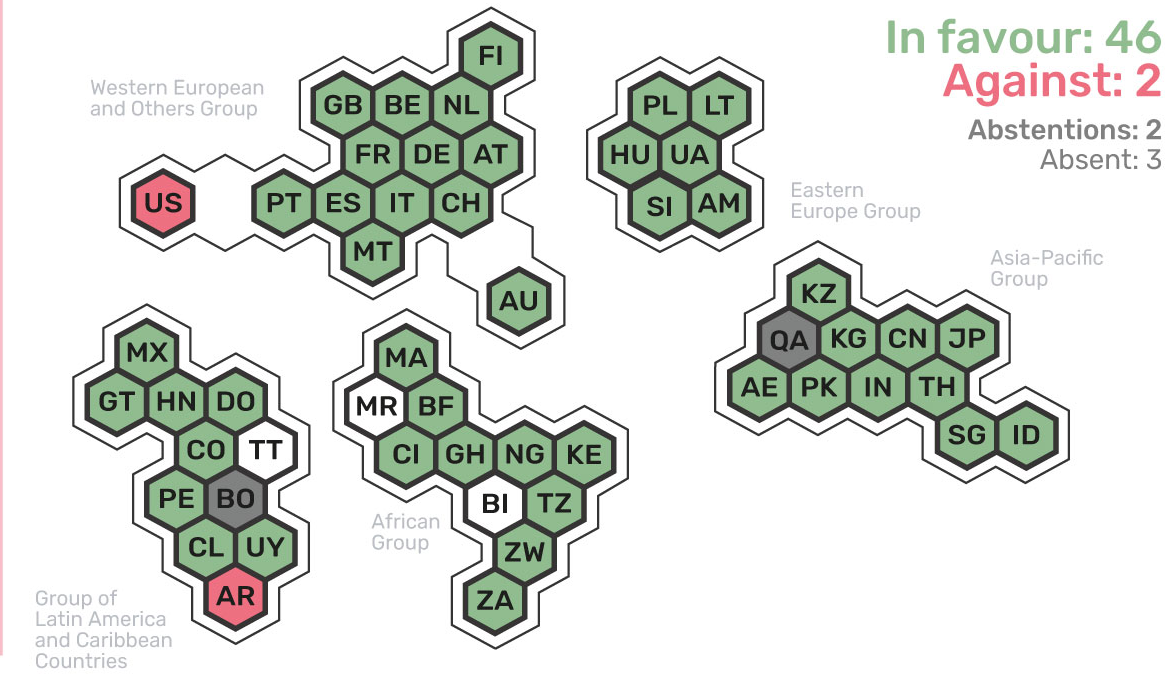
In favour: Armenia, Australia, Austria, Belgium, Burkina Faso, Chile, China, Colombia, Côte d’Ivoire, Dominican Republic, France, Finland, Germany, Ghana, Guatemala, Honduras, Hungary, India, Indonesia, Italy, Japan, Kazakhstan, Kenya, Kyrgyzstan, Lithuania, Malta, Mexico, Morocco, Netherlands (Kingdom of the), Nigeria, Pakistan, Peru, Poland, Portugal, Singapore, Slovenia, South Africa, Spain, Switzerland, Thailand, Ukraine, United Arab Emirates, United Kingdom of Great Britain and Northern Ireland, United Republic of Tanzania, Uruguay, Zimbabwe.
Against: Argentina, United States
Abstentions: Bolivia, Qatar
Chair: 46 in favour, 2 against, 2 abstentions. Commission adopted proposal L5. Any country wishes to make a statement?
United States: We called a vote and voted against due to its improper reference to the WHO in this context. WHO failed to respond to the health crisis and refused to implement necessary reforms and did not demonstrate transparency, accountability and independence. Some paragraphs direct UNODC and technical assistance providers to focus efforts on certain defined groups of countries. We will also continue to oppose sustainable development goals which advance soft governance.
Argentina: Agenda 2030 is composed of legal nonbinding aspirations which each state can interpret freely.
Russian Federation: We express gratitude to Kyrgyzstan for the resolution. The draft proposes specific measures to develop certain mechanisms nationally and regionally and also to bring international organisations with related mandates to engage which includes UNODC, INCB and WHO. We are seeing a rise in production and trafficking of chemical substances and precursors and we are sure adoption of this resolution can deter this threat and save lives of citizens.
Kyrgyzstan: We are committed to a comprehensive and balanced approach and timely identification of emerging trends as well as coordination at global level is more important than ever. The resolution focuses on early warning systems to enable effective responses to the emergence of new synthetic drugs and new psychoactive substances. We see early warning systems as a process to combine data collection and informed policy making to promote an approach that allows ????? emphasis to institutional coordination to ensure coherence among member states and other entities. This reflects understanding that modern drug policy must nt be only reactive but proactive. Express appreciation for delegations for their constructive engagement.
Chair: Any delegations wish to cosponsor?
Secretary: Chile, Netherlands, Honduras, China, Colombia, Japan, Pakistan, Colombia, Japan, Pakistan, Spain, Belgium, Australia, Finland, France, Germany, Kazakhstan, Malta, Poland, Portugal, Singapore, UK, Zimbabwe, Albania, Ireland, Egypt, New Zealand, New Zealand, Iran, Russian Federation
Chair: We move to next resolution.
Secretary: The last proposal is L6. Promoting integrated and coherent systems of scientific evidence-based drug-related public health responses, cosponsored by Albania, Bolivia, Brazil, Finland, Lebanon, Morocco and Norway
Chair: Can we adopt?
United States: We are not in a position to agree and call for vote
Chair: We will now proceed with voting. In accordance with rule 61 no representative may interrupt the voting except on point of order in relation to the act of voting. A simple majority of commission members present and voting is required. Members that abstain from voting are considered as not voting.
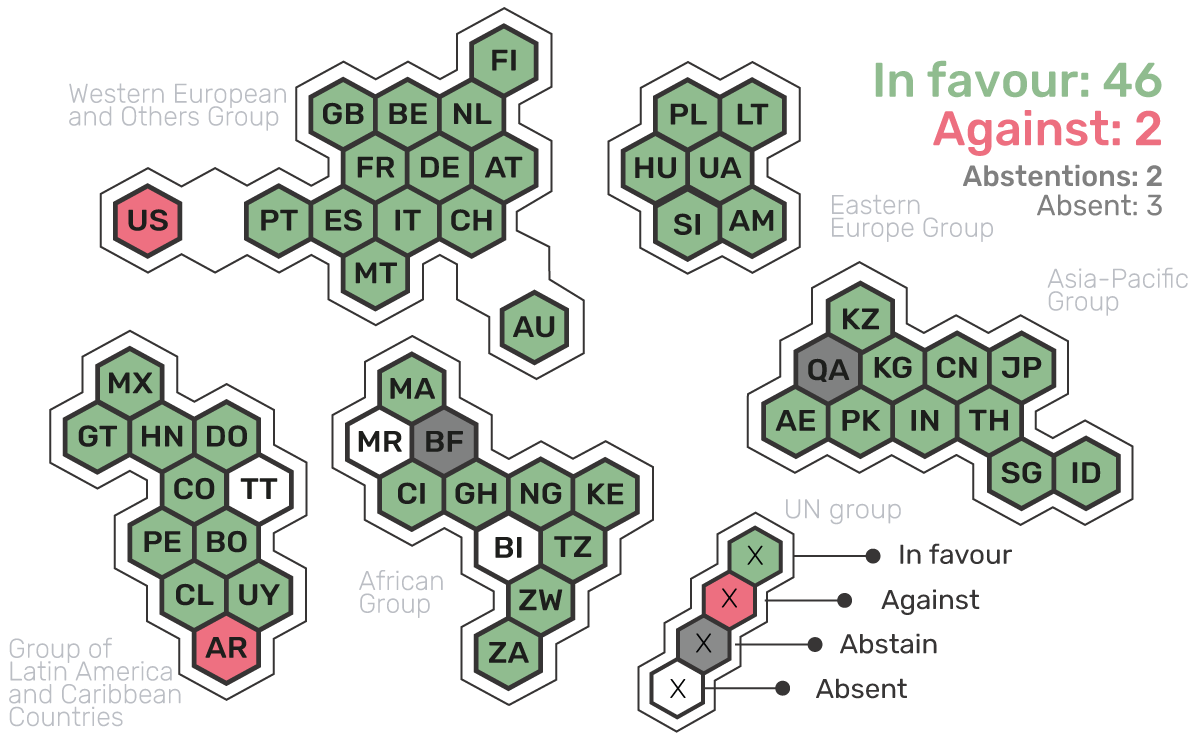
In favour: Armenia, Australia, Austria, Belgium, Bolivia (Plurinational State of), Chile, China, Colombia, Côte d’Ivoire, Dominican Republic, France, Finland, Germany, Ghana, Guatemala, Honduras, Hungary, India, Indonesia, Italy, Japan, Kazakhstan, Kenya, Kyrgyzstan, Lithuania, Malta, Mexico, Morocco, Netherlands (Kingdom of the), Nigeria, Pakistan, Peru, Poland, Portugal, Singapore, Slovenia, Spain, Switzerland, Thailand, South Africa, Ukraine, United Arab Emirates, United Kingdom of Great Britain and Northern Ireland, United Republic of Tanzania, Uruguay, Zimbabwe.
Against: United States and Argentina
Abstentions: Burkina Faso and Qatar
Chile: Just to say we voted in favour.
Chair: 46 in favour, 2 against, 2 abstentions. The Commission decided to adopt resolution L6 Rev 1. Does any delegation wish to make a statement in explanation of the vote or any general statement?
Finland: Debate has been constructive, respectful and aimed at a common goal. We give thanks to all from our cosponsors and UNODC who have made this resolution possible. As we celebrate the 10th anniversary of the UNGASS Outcome Document we wanted to table a public health Resolution. Drug policy should prioritise public health and wellbeing, as well as security of communities.
USA: Health policy must remain the sovereign responsibility of governments. Shaped by context and will of citizens and not imposed by bureaucracy and multilateral mandates. This resolution falsely implies that preventing negative effects of drug use are synonymous with harm reduction. We can prevent negative harm with interventions that focus on long term resilience and recovery and these are not the same as measures commonly referred to as harm reduction, in some countries, which we understand to include interventions that contribute to the normalisation of drug use. We continue to oppose sustainable development goals, which reflect soft global governance and are against our sovereignty. We support women’s access to substance use disorder treatment and other healthcare, but we can’t support language supporting the specific needs of women and girls. It is not right to refer to WHO as they have failed to respond to health crises, and not demonstrated accountability or transparency.
South Africa: Access to controlled medicines is a core obligation under international drug control treaties. Developing countries continue to have the lowest levels of controlled medicines as highlighted in the 2025 world drug report. Stringent control is necessary to present diversion but they may also unintentionally restrict access. We need to ensure availability and affordability of controlled medicines. When they are not affordable, the licit supply chain can be disrupted and create exploitation by criminals. Affordability accommodates accessibility and availability and should not be treated interchangeably. While we regret that a critical element of affordability was not included, we will work with the global community in addressing the world drug problem. We wish to cosponsor L6.
Norway: We decided to present this resolution as common and evidence based drug policy is achieved through a public health approach. Implementing public health response will result in better health outcomes but impact illicit markets and reduce crime. After UNGASS we believe it is time for CND to take stock of the health element of drug policy for member states and UN bodies. To provide normative guidance and move debate forward to inform policies and public health responses, in particular ahead of 2029. We would have preferred this to be adopted by consensus but appreciate the support of member states to the ideas of this resolution. CND has expressed key sentiment about core components of public health as balanced, effective, drug policy. While this was not intended to have specific focus on harm reduction but rather on the entire range of public health responses, with flexible and well intended efforts of all delegates we have been able to move discussions around harm reduction forward. While noting it is still not a universally accepted concept, we now believe we have agreed language to shape future consensus decisions on this topic.
Colombia: We would like to express our support for the adoption of this resolution. We believe the text adopted is a significant step forward for a balanced and integrated approach, protection of health, human rights and inherent dignity and rights of all at the centre of policies. We appreciate that this resolution understands the importance of the range of evidence based public health responses including prevention, early intervention, treatment care, social reintegration as well as harm reduction – a range of possibilities. We need effective and realistic tools to respond effectively to consumption in our countries. We highlight that the text acknowledges stigma and multiple intersecting aspects of discrimination and social barriers protect access to health and support to move towards people centered responses to give access to those with greatest vulnerabilities. It is important for CND to promote integrated response systems which are participatory, inclusive and can take on board specific questions at intersection of drug policies and functionality to achieve broader goals to achieve best possible right to health. We acknowledge the spirit of compromise, although there has been a vote, we appreciate efforts made by almost all member states to bring together approaches and understanding. We will also cosponsor this resolution.
Russian Federation: We would like equal focus on measures to reduce supply and demand as well as accessibility to controlled medicines. We don’t believe anyone wants conditions where someone close to them becomes a drug user and continues to be under the effects of drugs. For people with substance use disorder rehabilitation is necessary to lead a sober way of life. This methodology is prerogative of states as in the single convention of 1961. Harm reduction as applied by some states is not universally applied nor a definition in the UN. During informals we heard more than 5 different definitions and notions of what harm reduction would be. We have a comprehensive approach which allows for long term remission of patients which allows for OST or RT. Our view that the wording provides states with flexibility when selecting concrete measures given context in their country.
Singapore: We place emphasis on treatment systems and social support but equal emüphasis should be placed on law enforcement and stopping crime. Nevertheless we recognise the intent of this resolution and voted in favour
Argentina: Genders are only masculine and feminine. In Argentina women’s rights have been ensured through domestic practice and we think it’s not necessary to include this into sustainable development goals.
Ukraine: I congratulate the adoption of this resolution and thank you to sponsors and cosponsors. We just want to recall the situation that happened after the attempted annexation of the Ukrainian Crimea peninsula, when in 2014 Russian occupation stopped providing harm reduction and people started immediately dying. That’s the price. Harm reduction has been part of our policy for a long time and we will continue to do this.
EU: I have the honour to take the floor on behalf of the EU and its Member States. We congratulate Finland and Norway for the adoption of the resolution entitled “Promoting integrated and coherent systems of scientific evidence-based drug-related public health responses”, which the EU has co-sponsored on behalf of its 27 Member States. The EU strongly believes that alongside strengthening preparedness and anticipation of threats in an increasingly complex drug situation, greater emphasis must be placed on health. This resolution is timely, taking stock of the health dimension of drug policy ten years after the UNGASS. It underscores that a comprehensive, evidence-based, equitable and balanced drug policy is best achieved through a public health- and human rights-based approach, with particular attention to women and vulnerable and marginalised populations. Drug policies must be people-centred, aiming to minimise risks and harms associated with non-medical drug use and ensure health, dignity and peace for all, including people who use drugs, while contributing to the Sustainable Development Goals. In this regard, the EU prioritises scaling up the full range of public health responses—including prevention, early intervention, treatment, care, recovery, reintegration and harm reduction—addressing barriers to access to controlled medicines for medical and scientific purposes, and engaging all stakeholders, including civil society and community-led organisations, to ensure non-discriminatory, stigma-free access to care. Together with UNODC, the World Health Organization plays a key role in providing guidance and support to expand integrated, evidence-based public health responses. I thank you.
Chair: I ask the Russian Federation if the right of reply can be after adoption.
Secretary: Australia, Chile, Colombia, Kingdom Of The Netherlands, Mexico, Switzerland, Thailand, Ukraine, United Kingdom, United Republic Of Tanzania, Uruguay, Zimbabwe, South Africa, Canada, Egypt, New Zealand, Ireland, Peru, Ghana
Chair: This completes the adoption of the resolution
Russian Federation (right of reply): respond to Ukraine who made reference to the idea that in 2014 people of Ukraine chose to return to Russian Federation and that led to death after end of harm reduction. I’m speaking of opioid substitution therapy because using substitution wouldn’t be the right turn because the patients we are talking about were over 800 and 10 died, and it was not because they were not receiving methadone. There was a lessening of the dose by a certain amount to softly transition from this therapy. The international community shares this approach. Our American colleagues and gynaecologist assist us in applying the therapy to 2 pregnant women who gave birth, one of the at least whose child is drug free and living a healthy life. Take a look at the publication from an American journal regarding this. And please check twice research and be careful with what you say on the microphone
Ukraine: Firstly, it was 805 people – we count every person. Everything after February 2014 happened because of occupation. Everything was made against their will by occupation authorities and what’s happening in Ukraine is attempted annexation. More than 40 died.
Item 11. Other business
Chair: I return now to agenda item 11. Are there any statements under agenda item 11? I don’t see any. At this point we will adjourn the meeting to give time for the creation of the report. We will return at 15:00.