Item 5e. Other matters arising from the international drug control treaties
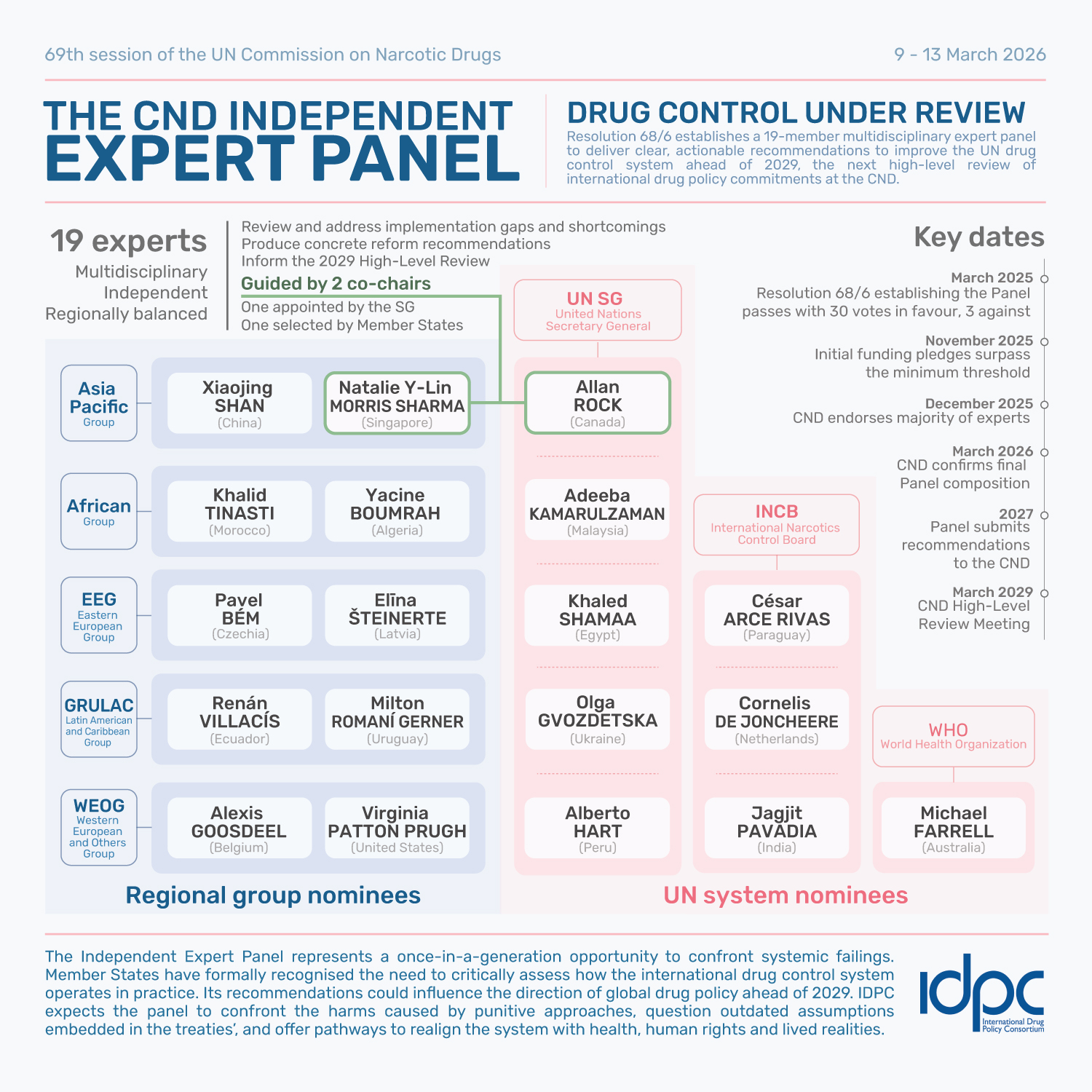
Chair: We will continue agenda item 5e to elect the second co-chair of the expert panel. I recall that there are two co-chairs selected, one by the CND and one Secretary General. It should be chosen with consideration to balanced representation and diverse policy approaches. By February 16th 2026, three experts expressed interest in being considered for election: Natalie Y-Lin Morris Sharma, of Singapore and Khalid Tinasti, of Morocco, Virginia Patton Prugh of USA. Yesterday, Virginia Patton Prugh had withdrawn her expression of interest and this morning Khalid Tinasti has also withdrawn. Since we have only one candidate for the vacant seat, I invite the commission to appoint Ms Natalie Sharma by acclamation. I see no objection. I express congratulations to Ms Natalie by the appointment. The expert panel is now fully constituted, with 19 independent experts appointed to serve as co-chairs. I wish every success to the panel in carrying out its important mandate. The independent panel constitution is now completed. I congratulate co-chairs on their selection and hope they can contribute to constructive reflection and the CNDs work. We look forward to their recommendations. I thank the secretariat for facilitating the panel and supporting the panel to commence activities without delay.
Singapore: We recognise qualifications and experience of all candidates and appreciate willingness to serve. Notwithstanding circumstances we believe this is an important outcome with co-chairs that reflects diversity. A diverse gender balance, policy perspective, and geographic diversity. The panel has the responsibility of setting the tone and sending the right signals. The first step was taken to select balanced leadership to guide the panel. We are confident Ms Sharma will represent a balanced approach to the drug control framework.
Item 5c. International Narcotics Control Board
Venezuela: We recognize the INCB as the body mandated to oversee the three drug control treaties which are pillars of the control system. We note the trends and recommendations outlined within the 2025 INCB Annual Report. We recognize our commitment through the return of data collection forms for ensuring integrity and accuracy of the control system. Intensifying efforts to tackle diversion of controlled substances and ensure info given by states can be duly received by the INCB. It is important for the INCB to get adequate financial backing to guarantee continuity in its capacity to strengthen national capacity in international control. This allows us to maintain control mechanisms but also ensures states have up to date tools and well trained staff to counter diversion of controlled substances. We maintain a sustained policy combatting illegal trafficking in drugs based on international cooperation, territorial control, and actions of security services. This work has led to drug seizures and the neutralisation of criminal networks. We are concerned by US statements at this commission following their act of military aggression. Despite serious facts we have opted to pursue diplomacy. Respectful and constructive conversations are being held between both governments. Thus Venezuela can honour our willingness to enter into dialogue and avoid narratives counter to tackling the problem.
Item 5d. International cooperation to ensure the availability of narcotic drugs and psychotropic substances for medical and scientific purposes while preventing their diversion
Angola: We welcome the relevance of the topics of the agenda. Ensuring availability for medical and scientific purposes while preventing diversion is of central importance. For us, a balance is crucial and medicals for treating pain and palliative are essential for health and stopping diversion is required to public security. This topic requires international cooperation and technical assistance as well as modernization of systems. Regulations are not the same as excessive restriction. We commit to international conventions and promote a public health approach focused on human dignity.
Venezuela: At the end of 2023, we hosted a workshop on availability of controlled substances for medical and scientific purposes as well as capacity building webinar to Latin American countries. This was an example of international cooperation sharing a shared understanding of challenges associated with appropriate use of controlled medical substances. In the INCB report there was concern about availability and access to substances for medical purposes. Considering unilateral pervasive measures imposed by international actors that affected imports of controlled substances, we have made efforts to universal and free access to public health. It’s essential that we promote international cooperation and technical assistance to overcome limitations that affect developing countries to guarantee solutions that ensure the right to health and dignity to the population.
Chair: We move to 5e.
Item 5e. Other matters arising from the international drug control treaties
Russian Federation: We were unable to reach consensus on the outcome text but on the principle of common and shared responsibility for addressing the world drug problem we had a constructive approach and opted for dialogue. The countries ended up opting for an expert with a similar approach to other members which prevented the Russian experts from taking part. We congratulate Singapore on their election. We are sure the voices will provide a balanced approach. The recommendation of this mechanism can be adopted by the commission only if the decisions in the panel are consensual. Allow me to also speak under 5e. We comply with our obligations under the 3 drug control conventions. We fight crime as part of a coordination effort with other law enforcement agencies. Our legal regulations are upgraded. Amendments were introduced and we now recognize digital currency as a property and subject to confiscation which simplified the work of law enforcement particularly money laundering. We want to note that total individual number of individuals sentenced over the course of the year was 69.0000. In addition to suppression of liberty and suspending sentences, we also apply other punitive measures such as mandatory treatment. This was applied to 3000 people. We want to form a society with a negative attitude to drug use. Wide use of digital resources in promotion and distribution of drugs is a threat to national security. Shift to virtual sphere required law enforcement to counter online use of drug online monitoring to identify and block this info that includes young people (…)
Colombia: We welcome the panel of experts and that they can now start their work. This started from CND and was agreed by member states which grants it legitimacy for the mandate. We express congratulations to the states who contributed to the process and trust the experts to act in full independence and use balanced approaches to respond to the international drug control system and tackle problems such as death penalty, incorporation of human rights and damage reduction to lead to more effective and evidence-based policies. The make up of the panel is balanced enough to guarantee rich exchange and diverse perspectives mean we can have reality based assessments and more to evidence-based recommendations. We trust that the international community will construct a more effective and equal drug policy.
Uruguay: We support the process from Resolution 63/6 as important to the functioning of the CND. The development of an independent panel is an important step and unique opportunity to enrich collective understanding and inform decisions that the intl community will take in the run up to 2029. This will help the system offer more effective responses. We trust the panel will comply with the mandate independently and with the highest technical standards. We are delighted at the election of our specialist as a member of the panel. His in-depth knowledge of the international control system means he will make invaluable contributions. We want to ensure the proper functioning of the panel with multilingualism. The UN enshrines multilingualism. The panel should be able to carry out its work with guaranteed equality of conditions and freedom to express themselves in a way that is accessible for all. It is important to revise budget estimates and make adjustments to guarantee required interpretation and translation in line with relevant UN languages and makeup of the panel aligned with standards of ECOSOC.
Belgium: We thank member states for supporting the election of our candidate. It testifies to the recognition of expertise and contribution to drug policy. We thank experts nominated and selected by other regional groups. We extend congratulations to co-chairs of Canada and Singapore. Reiterate full support for panel and mandate. Can play a pivotal role to identify gaps and advance human rights based drug policies in line with objectives of CND. We look forward to engaging constructively with the panel.
Cuba: Unwavering willingness of Cuban state to zero tolerance policy. We don’t produce, store, or transit drugs. We are no threat and are an active part of the solution in tackling scourge. The threats we see are outside of our country. Institutional response has been aligned with international treaties. We have stopped 8 operations in rapid boats that have tried to introduce drugs. We have seized two tonnes of drugs which mostly did not have Cuba as destination. We have identified 46 different synthetic cannabinoids and we seek solutions to challenges, such as spray for synthetic cannabinoids to train dogs and give to training centres, ensuring dogs are able to detect new cannabinoids. The growing impact of synthetics needs a joined up response. International cooperation and technical assistance are essential pillars to tackle new psychoactive substances. Committed to collaboration to develop science and research and seeking alliances to accelerate regional response capacity. Even in adverse conditions it is possible to have effective policy. We will continue to protect the health and security of our people.
Ukraine: We would like to congratulate Singapore for the election. We deem geographical diversity as important. We are also pleased to know that the Ukrainian expert is part of this team and we look forward to the deliverables of this group in the framework of CND.
United States (right of reply): The US responds to statements made this morning. Economic sanctions are legitimate and appropriate tools to respond to illegal activity. The US is not alone in that view and practice. US sanctions target behaviours that threaten human dignity and security. Sanctions are a tool to change behaviour, not a punishment. They are built to tackle the abilities of bad actors to make use of our financial systems, not to prevent humanitarian assistance. President Trump has made clear that he will not tolerate any threat against US citizens and will take any necessary actions to prevent it.
Item 4. Strategic management, budgetary and administrative questions (continued)
Chair: We must action the recommendations for the FINGOV Bureau for 2026. Can I ask the commission if we are ready to endorse the recommendation of CND and CCPCJ of H.E. Debora Lepre of Italy for the position of FINGOV first vice chair and Victoria Rosa of Moldova for the position of FINGOV vice chair. I don’t see objections. It is so decided.
Item 6. Follow-up to the implementation at the national, regional and international levels of all commitments, as reflected in the Ministerial Declaration of 2019, to address and counter the world drug problem (continued)
Venezuela: Venezuela, using an integrated and human based approach, took 20,00 preventive steps in 2025. Reaching 2 million people as part of our policies focused on vulnerable populations. These activities included the recovery of culture and sport spaces to encourage protection factors and reduce risks for children and adolescents. A study determined that the rate of consumption in Venezuela reduced in 2022 compared to 2011. In 2025, The National Addiction System carried out care for 25,000 patients, focusing on people on the streets and ensuring their rehabilitation. 8.8 tons of drugs, the highest figure in the past 20 years. We must highlight international cooperation with Brazil, China , Colombia, Spain, Italy, Mexico, Nicaragua, Netherlands, Dominican Republic and Russia. To go into more depth we invite you to a parallel event at 1pom in M5. Venezuela has built these links thanks to the commitment and willingness to participate in various spaces and recognizing the participation of international organizations such as INCB, CELAC-EU, CND, EU,… and bilateral relationships. We highlight the role of UNODC and its regional structures, especially in providing technical assistance and capacity building. We urge states to continue supporting these organizations to support the multiple challenges of the drug world problem. We would like to reiterate our call to reiterate cooperation, exchange of experiences and best practices, based on the respect of sovereignty, international law and mutual trust to tackle this problem in strict compliance with international law.
Russian Federation: Joint statement on behalf of 44 states. Angola, Bangladesh, Belarus, Brunei Darussalam, Burkina Faso, Burundi, China, Cuba, North Korea, Egypt, Indonesia, Iran, Iraq, Jordan, Kazakhstan, Kuwait, Kyrgyzstan, Lao PDR, Libya, Malaysia, Myanmar, Namibia, Nicaragua, Nigeria, Oman, Pakistan, Palestine, Qatar, Russian Federation, Saudi Arabia, Singapore, Sudan, Tajikistan, Tanzania, Tunisia, Türkiye, United Arab Emirates, Uzbekistan, Venezuela, Viet Nam, Yemen, Zimbabwe. We reaffirm CND’s role as a policy making body in drug control matters. Underscore single convention of 1961 amended by 1972 protocol. The 1971 and 1988 treaties of the UN constitute the cornerstone of the international drug control system. And we also recognize the fundamental role of INCB in monitoring compliance. There’s a need to strengthen the board’s dialogue with governments and improve objectiveness including support implementation of treaty mandated functions. We believe conventions allow for enough flexibility regarding measures such as those against abuse of drugs. There’s a need to respect every country’s sovereignty to implement drug control policies suited to their national situation without imposing specific models or approaches. There is no one size fits all approach to address the world drug problem and the flexibility should not collide with state parties obligations to limit use of drugs exclusively for medical and scientific purposes. In the case of cannabis legalisation for non medical and non scientific purposes, this contravenes 1961 convention and is a challenge to joint community. We urge member states to comply with the legally binding provisions of conventions. We are concerned with the detrimental effects of legalisation of cannabis on public health safety and initiation of drug abuse in children and youth. This legalisation can be exploited by transnational drug related criminal networks and puts a burden on law enforcement. We underline that this is a threat to promotion and protection of human rights. The most effective way to promote human rights is to prevent illicit diversion of drugs. We believe abstinence should be the ultimate goal. Reducing harm does not provide a sustainable solution to the world drug problem and minimizing harms does not confront root causes, does not enable international communities to make progress. This limited approach perpetuates and increases challenges and implies tolerance to drug abuse and leads to legalisation which worsens the problem. The international community should not surrender to this scrooge. We underscore the need for evidence-based approach, comprehensive and balanced to address and counter world drug problems to ensure everyone can live in health, dignity and peace and emphasize that strengthening cross border law enforcement cooperation is essential and acknowledge the contribution of CND’s bodies in addressing drug problems. Particularly the role of international cooperation in preventing and combating drug related crime and responding to challenges and barriers in particular measures that are not consistent with the charter of the UN. We urge member states to refrain from those measures. We need further ambitious actions to promote implementation of all international drug policy commitments. We call the independent expert panel to comply with this mandate and prepare non binding recommendations to enhance implementation of all international drug conventions. We welcome dialogue between member states and sharing national best practices. Now regarding national Russian comments on this agenda item. Russia continues committed to drug control conventions and seeks a world with no drugs. We involved many members of federal departments, civil society and other institutions and we managed to see a reduction in the number of drug users in the last years. Some trends are also visible in our country such as domination of synthetic drugs and drug markets using crypto currency. Modern technologies made us adopt laws such as criminal liability for financial transactions and we reduced by 2 fold drug financial transactions in bank accounts. We also introduced measures for substances and precursors which we continue to update with new precursors. We continue active work to prevent drug use and prevent and counter online drug content and we plugged many websites and work with administrators of social media to engage in awareness raising. Many take alternative approaches such as decriminalisation of consumption of some substances but this undermines the international drug control regime and gives power to the criminal organisations. We want to ensure a world free of drugs.
Norway: Member states and stakeholders should share progress experiences and lessons learned. We joined Pledge4Action and want to present an update on implementation. We strengthened evidence-based treatment options ensuring meaningful involvement of people who use drugs in policy making. Our approach includes commitment to new dynamic measures to respond to emerging drug use patterns to reduce drug related mortality. We expanded access to effective interventions. We scaled up naloxone availability and OAT is provided without waiting time. We are investing in gaps such as evidence-based pharmacological treatments to stimulant users with dextroamphetamine in a trial that recruits participants across several treatment services in Norway. A 12 week treatment where they received placebo or dextroamphetamine combined with psychosocial support. This is grounded in the need to reduce harms associated with high potency events such as overdose, psychosis, cardiovascular complications and long term cognitive impartments. This study examines not only reductions in use but also mental health indicators, quality of life and high risk episodes. In this field there are not yet approved medications in most states. We see this as an important contribution to science for a more effective health response to stimulant use. Beyond research, we endure high standards of healthcare for people with substance use disorders. Waiting times for treatment and shorter than in other health conditions and hospitals have integrated services and aftercare. We appointed a Substance Treatment Committee to review structures and financing models for treatment and harm reduction including evaluating opioid agonist therapy. Meaningful involvement of people who use drugs is integral to our approach and we have multiple mechanisms in place from formal consultations and hearings, to participant strategy development and research tailored to user led organisation. We made involvement more consistent and predictable across levels and feedback informs us that we are fulfilling procedure requirements for involvement of civil society organisations representing people who use drugs regarding transparency, honesty, possibility to influence policy development. There is room for improvement and we will continue to strengthen frameworks. We will continue to invest in evidence-based prevention and professional development of the prevention workforce. We are still committed to involving health centered evidence-based and human rights oriented responses to the world drug problem.
African Union: Africa continues to face evolving regulating challenges as a corridor and critical expansion market. Higher level of drug use and rising substances. The African Union is committed to implement the 2019 declaration and implement evidence based approaches based on sustainable development. The African Union advanced a public health centred approach in line with the declaration. This included, among other measures, expanded treatment and preventive services and reduced access to control medications. It also strengthens drug supply reduction with intelligence sharing to combat illicit drug trading grounded in human rights and the SDGs. In 2025 the African Union completed an evaluation of its 2019-2025 drug action plan. The findings are guiding the development of a new continental framework to be adopted in 2026. The African Union reaffirms its commitment to international cooperation to address the world drug problem. It commits to continue cooperation to advance the goals of the declaration.
Zonta International: Longer and detailed version on website. Mission: equality, empowerment, and women of all… Women develop drug addiction faster than men, are more vulnerable and face multiple damages caused by gender stigma and discrimination. Drug services remain largely focused on me. Women are disproportionately harmed by criminal measures. The IDPC report 2023 documented the disproportionate impact of marginalized populations including women. The Drug Report 2025 says that coverage remains inadequate and funding is a looming crisis. The failure persists despite commitments made in the past to mainstream gender perspectives and ensure non discriminatory access to healthcare. Including the Universal Declaration of HR, the Agenda 2040 and… Zonta calls states to uphold Human Rights frameworks, ensure stigma free gender responsive services, investing in harm reduction, including gender equality in drug policy and alternative development.
Amnesty International: I deliver this statement on behalf of Amnesty International, Harm Reduction International and Justice Project Pakistan. Our organizations have independently and consistently recorded that in recent years over 40% of all known global executions have been carried out for drug-related offences. This means that hundreds of people, including many from disadvantaged socio-economic backgrounds, continue to be put to death every year in the name of drug control – often after unfair proceedings that render the use of this punishment arbitrary. The death penalty, and especially when used for drug-related offences, is not in conformity with the three international drug control conventions, nor with applicable international human rights obligations. As such, it poses a challenge to the implementation of all joint commitments based on the principle of common and shared responsibility, as outlined in the 2019 Ministerial Declaration. The CND reaffirmed in that Declaration its commitment to human rights and to put people at the centre of drug policies. While acknowledging the statements that several delegations made on this issue during this session, the deafening silence of the CND on the continued use of the death penalty for drug-related offences needs to end now. It is an egregious human rights violation that leaves this body’s commitment to human rights empty of meaning. We call on all states that retain the death penalty to fully abolish it as a matter of urgency; and we urge UNODC to ensure that its work with these countries does not risk contributing to the use of the death penalty. It is also time for UNODC to fully document the human rights impact of drug control policies in its yearly World Drug Report, including in relation to the death penalty; and to ensure that drug- related executions and death sentences are explicitly condemned. This matter must also be featured prominently in the new UNODC strategy. We request delegations at the CND to establish a regular agenda item to consistently reflect on the challenge identified in the 2019 Ministerial Declaration in relation to human rights, including the death penalty; and to request UNODC to report on its findings on this matter as part of this agenda item. Putting human rights concretely on the agenda of the CND would be a first critical step to deliver on its human rights commitments.
United Arab Emirates: We continue efforts towards the Ministerial Declaration 2019 which calls for strengthening joint action at national and international levels. This is based on our belief in the importance of shared responsibility and balanced approach and international cooperation. We have developed a legislative and institutional framework aligned with international best practices. Reflects balanced approach focusing on strictly combating illicit use and focus on treatment and rehabilitation. We have expanded rehabilitation and strengthened use of controlled substances through social protection and prevention programs. Our National Anti-Narcotic Strategy 2024-2031 is implemented, aiming for a drug free society through strengthened prevention, early detection, treatment and rehabilitation. Strengthening the flexibility of society and providing prevention and treatment for the most vulnerable. Strengthening detection and use of controlled substances. Regarding institutional organisation we have coordinated efforts among state and local institutions as well as educational institutions and implementing all national laws and strategies. This strengthens complementarity to counter drug cartels and strengthen coordination with rehabilitation and treatment centres. We remain committed to countering drugs and participating in CND and supporting international initiatives against illicit drug trafficking. Developing partnerships with states to strengthen law enforcement and counter transnational organised crime. Support international efforts to strengthen balance and invest in prevention and awareness campaigns, supporting treatment and rehab and using AI and innovation to detect crime. Firm commitment to the Ministerial Declaration 2019 and contributing actively to international efforts to protect societies from danger of drugs. In closing we share international communities concern about the growing threat of synthetic drugs and counter these challenges by targeting groups involved.
Elternkreis Wien: I make this statement along with Knowmad Institut and Misión Sacerdotal, SVA. In the current context the legitimacy of policy must rely on demonstrating verifiable results on the lived realities of people. Policy decisions affect people, rights, and communities of people in vulnerable situations. Especially those facing both violent drug markets and the effect on criminality on social cohesion. Legally binding commitments and statistical reporting obligations. As we approach the 2029 Review, limited methodological comparability across national systems remains. Differences in definitions, methodologies, indicators make it difficult to measure progress across states. As such, the international system faces challenges to measure the impact of policies to prevent violence and strengthen communities. Focus on impact on people, protection of rights, proportionality, and sustainability in line with human rights and public health commitments. The 2029 review represents an opportunity for reporting and methodological consolidation to strengthen the multilateral system. Ultimately public policy is not measured through indicators but through reality. Whether people can seek treatment without fear and can live free from violence or crime. In an environment marked by geographical tensions, methodology and data integrity are conditions for trust. Without data collaboration loses clarity and legitimacy. We have an important opportunity to refine these metrics and strengthen credibility. From CSO we reaffirm our readiness to place human dignity and verifiable evidence at the centre.
Youth RISE: I speak on behalf of Youth RISE, an international network of young people who use drugs and young people affected by drug policies. We advocate for evidence‑based, rights‑centred approaches that prioritise young people’s health and well‑being, while addressing the structural conditions that shape our vulnerability. Discussions about drugs almost always start from the same place: “How do we protect young people?” But there is another question we urgently need to ask: What does real protection look like in our lives? On the 9th of March, the Human Rights Council in Geneva observed the Annual Day on the Rights of the Child, focusing on “the human rights violations of children in armed conflict.” In many parts of the world, militarized efforts to curb organized crime and drug trafficking lead to armed clashes that place children and young people at greater risk of experiencing direct violence from both criminal groups and the law enforcement sent to dismantle them. Police raids profile and criminalize youth in low‑income communities and feed into stigma and discrimination that have lifelong consequences. During these operations, young people cannot freely walk in the streets, go to school, or reach healthcare facilities – and these disruptions can last for days. Resolution 68/6, which established the independent expert panel, calls for consultations with a broad range of stakeholders, including youth. As part of a project led by the Global Commission on Drug Policy, Youth RISE conducted consultations with young people in diverse regions to understand how drug policies shape their lives, rights, and access to care. We are turning these findings into evidence‑based recommendations in a policy brief to be released in April. We grounded this work in international human rights frameworks – especially the Convention on the Rights of the Child – and ensured that children’s and young people’s perspectives guided the analysis and the recommendations. Ten years ago, the UNGASS carried the slogan “A better tomorrow for today’s youth.” We ask Member States: was that merely a slogan, or did it lead to meaningful action? Do the laws implemented since then reduce stigma and violence, or do they drive them? Real protection for children and young people cannot be measured by drug seizure numbers alone, but by whether young people – including young people who use drugs – are safer, healthier, and freer. We urge Member States to apply the principle of “do no harm” across all policies that concern youth, recognising meaningful youth participation, harm reduction, and the protection of rights as non‑negotiable standards. Thank you.
Africa Network of People Who Use Drugs (AfricaNPUD): I speak for the Africa Network of People Who Use Drugs. Across Africa, drug policy remains rooted in colonial, punitive frameworks that criminalize and marginalize our communities. This drive for punishment fuels incarceration, poverty, stigma, and preventable deaths. Harm reduction is more than drug use autonomy, it is a movement grounded in human rights, bodily autonomy, and justice, led by those most affected. We draw solidarity and lessons from movements across Latin America, Asia, and the Global South. Community-led responses from Colombia’s coca initiatives to Senegal’s integrated opioid agonist treatment [OAT] services and grassroots work in Africa that shows inclusion, not punishment, makes societies safer. We demand that harm reduction include everyone impacted by drug policies: users, growers, sellers, and families. Artificial distinctions between “deserving” and “undeserving” undermine our movement. Donors and governments must divest from the drug war and invest in health, justice, and community care. Redirect policing budgets to community-led harm reduction and economic alternatives. Fund models must prioritize flexible, core, long-term support for grassroots organizations. Programs like the Robert Carr Fund and Love Alliance have been vital; their continued support is critical. Center leadership from the Global South. Follow, resource, and amplify the expertise of people with lived experience working in informal settlements and marginalized communities. Let decision-making and funding flow to those who deliver results on the ground. We leave Vienna with a clear call: divest from the drug war; invest in health, justice, and community; and commit to Nothing About Us, Unless By Us. When people who use drugs lead, harm reduction becomes a radical, loving, and transformative force.
United States (right of reply): In response to statements of agenda item 6, we reiterate that economic sanctions are legitimate and appropriate tools to respond to illegal activity. The US is not alone in that view and practice. US sanctions target behaviours that threaten human dignity, security, and global stability and undermine human dignity. We fully support INCB in their treaty mandated functions and compliance matters.
Item 7. Inter-agency cooperation and coordination of efforts in addressing and countering the world drug problem.
Chair: In the political declaration and plan of action of 2022, 2009 states encourage international regional agencies such as UNODC, WHO, UNDP and INCB to engage in dialogue to improve interagency cooperation for a more effective response. In the outcome document of UNGASS, member states encouraged the commission and UN member States to increase cooperation with UN entities and financial institutions when assisting member states in creating strategies, policies, and programs. It seeks to increase horizontal cooperation with other commissions addressing cross-cutting issues. In the High-Level in 2024, member states agreed to strengthen cooperation in all levels and increase contributions of relevant UN agencies, international institutions, to address the world drug problem. In 2018, we adopted the common UN policy to strengthen policy cooperation and deliver support to member states. A UN system coordination task team led by UNODC was created to ensure coherence in data collection and scientific approaches.
UNODC: Global drug landscape has changed profoundly over the past decade and plant based and synthetic drugs present significant challenges. Meeting this challenge requires commitment to multilateral cooperation because no country or entity can respond alone. We need to align our mandates. As the lead UN entity on drug matters, we remain at the forefront of efforts. The UN family benefits from a range of institutional mandates and technical expertise and this diversity is an asset. Certain initiatives, policy proposals and guidance from parts of the UN system have diverged from the spirit of international drug conventions advancing approaches that concern member states, and this complicates collaborative assistance and poses challenges to coherence. The UN common position provides a mechanism to support coordination among UN entities and must be implemented respecting international legal frameworks. We continue to deepen coherence and ensure joint outputs uphold international agreed norms that respect treaties and respond to member states priorities. I will highlight some examples of collaboration. Our cooperation with international maritime organisations, INTERPOL, World customs organisation, universal postal union, … strengthened capacity to detect and counter drug trafficking. Partnership with ???? and others have integrated development, peace building, sustainable livelihoods and efforts to reduce reliance on ??? crop cultivation. For more examples, consult conference room paper presented at this CND on interagency cooperation.
Colombia: Multidimensional nature of drugs phenomenon means that interinstitutional coordination cant be a formal exercise focused on supply and demand but a practice reflected across the whole system with complementary perspectives. The work of HRC is essential. We should strengthen dialogue with women’s groups and with Special Rapporteurs from the HRC regarding gender equality, human rights, sustainable development, and vulnerable populations to move towards more balanced policies, evidence-based, with human rights approach and gender sensitivity and aligned with the 2030 agenda for sustainable development. It will avoid fragmented responses and promote integrated national efforts. Coordination is not an option but a requirement to maximize resources, and guarantee coherence.
Russian Federation: Illicit drug trafficking is not only a threat to the health of citizens but it’s also a sophisticated mechanism to hide the activities of organized crime. The Intelligence Service of Russia, and looking at the information of other agencies, we see the use of crypto currencies, and cards issued by shell companies. These cards are opened by citizens of other countries across the world. Through international cooperation we will be able to counter this threat. Russia with all its partners targets measures aimed at preventing organised crime to prevent the involvement of minors in the illicit financial system. We are involving around 60 million people around the world throughout the financial intelligence units around the world for unified databases for false bank accounts. We are seeking to identify the traces of illicit drug trafficking. We are improving our national regulations such as introducing legal liabilities and measures for crypto currency used by bank compliance systems. We are discovering criminal cases and last year Russia’s general Prosecutor opened cases involving financial crime. When it comes to international cooperation we have seen success streamlining the efforts of international partners. Authorities involved in identifying the criminal transactions are struggling to receive information from crypto services because companies do not respond to information requests. We aim to reduce this shadow sector of the economy that impacts the drug market, especially those not foreseen by national jurisdiction.
Japan: We recognise the importance of strengthened cooperation in addressing the world drug problem. Require coordinated effort including among UNODC, WHO, UNAIDS, INCB, and other commissions. Perspective of the UN80 initiative it is essential. We continue efforts to enhance efficiency across the UN system, which includes unnecessary overlap of mandates and promoting coherence. Effective cooperation should allow each organisation to operate according to comparative advantage. The functioning of ECOSOC plays an important role in facilitating work within respective mandates. Ensuring member states are appropriately represented in these commissions will strengthen effectiveness.
Republic of Korea: In recent years international trafficking has become increasingly organised and sophisticated. We have taken comprehensive measures to address challenges. We have conducted enforcement operations in order to prevent trafficking. By hosting international meetings, we share information and progressive investigations, strengthening cooperation. Through the Colombo Plan, we promote international cooperation for strengthening drug rehabilitation approaches and reducing supply and demand of illicit drugs. We will strengthen solidarity with the international community and make every effort to address the world drug problem.
Ghana: This topic is critical as the evolving nature of the drug situation requires coherence. The UN has reaffirmed that the world drug problem is multifaceted, touching on health, security, governance. We require joined up action across UN entities. As highlighted, more than 23 entities have contributed to system wide efforts with a large scale and importance of collaborative engagements. The 2019 Ministerial Declaration and associated CND Resolutions call on UNODC and other UN agencies to enhance cooperation to ensure coherent support to Member States to design and implement comprehensive drug strategies and stress the value of evidence-based responses. The UN system’s efforts to harmonise policy positions are reflected in the UN common position. Collaborative programs on prevention, early warnings and building resilience. We are working to guide international policies and CND statements. The international community has emphasised that working in silos undermines progress. It is essential to work closely with regional partners, improve intelligence sharing across borders. Regional structures rely on information exchange and technical assistance from UNODC and other partners further underscoring the need for interagency cooperation. We affirm commitment to a balanced strategy grounded in public health, sustainability, and sustainable development. Engagement between government, law enforcement, public health systems, and social protection structures are essential to meet our obligations. Working closely with governments and civil society active in the drug field through collaboration we aim to strengthen synergies and say addressing the world drug situation is a shared responsibility. As we look forward to the 2029 Review we underscore three priorities. Joint UN initiatives in early warning systems and treatment systems to combat synthetic drugs, aligned with the UNODC Synthetic Drug Strategy. Improve coherence and ensure alignment with human rights and development mandates. Enhance technical support to enable Member States, especially developing countries, to operationalise responses. We work with UNODC, WHO, INCB, UNAIDS, UNDP to build coordinated and people centered global drug response.
Indonesia: We recognize the world drug problem is evolving more rapidly than we can respond. Collective ability to respond diverges and many countries still face limited resources and fragmented efforts. We need interagency cooperation and the key to success is not only effective agency collaboration through governments approach but a supportive, equitable and wellbeing international environment. Partnership with UNODC is essential in helping developing countries improve and adopt balanced and evidence-based policies that are coherent. This cooperation improved our early earning system and precursor control. We are concerned with the capacity gap between countries to counter the world drug problem. Developing nations have structural constraints, limited infrastructure and disparities that undermine global efforts. We underscore the importance of regional cooperation and call Southeast Asia and member states with support of UNODC to enhance cross border cooperation. We are committed to a coherent response and to achieve a world free from drugs.
Australia (behalf of MIKTA): On behalf of a cross regional partnership of Mexico, Indonesia, Korea, Turkey, and Australia, we deliver our first joint statement. We represent diverse cultures who experience challenges of a changing drug landscape. We need to deepen cooperation anchored in shared commitment to multilateralism and upholding international laws. We want to engage CND, supporting pragmatic and innovative approaches. The proliferation of new psychoactive substances is a growing threat and we encourage information sharing, early warning systems, and we appreciate the work of INCB and UNODC. We highlight the need to strengthen international collaboration with relevant stakeholders to address evolving supply chains. This includes through evidence based approaches focused on public security and public health, and respect to human rights. MIKTA notes the resolution by Mexico to prevent the diversion of equipment and related materials used for illicit drug manufacture. We welcome INCB to enhance international cooperation on issues relating to diversion and trafficking of materials and equipment and to increase focus on investigation of seized equipment and materials. This commission plays as the central policy making body for international drug control and drug related matters. We express our continued commitment to supporting the CND’s principal role in addressing the world drug situation. We appreciate the work of the UNODC as secretary of commission and their efforts to maintain functionality during a period of financial and resourcing challenges. We appreciate INCB efforts despite financial constraints. We work together with member states to share best practices.
Thailand: Integrated approaches bring together multiple networks and government networks. Voluntary outpatient mandates ensure continuity of care and reduce fragmentation between agencies and support policy decisions. Our community mobilizes social rehabilitation in 82% of regions nationwide. Thematic case monitoring brings work to underserved areas. We actively participate in cooperation with regional networks and cosponsor efforts within South China to centre primary prevention. We believe a sustainable response reaching governments institutions and partners to address the world drug problem.
Nigeria: Nigeria recognizes that effectively addressing and countering the world drug problem requires strong interagency cooperation and sustained partnerships. Nigeria’s strategy plays an essential role in coordinating the drug response, working in close collaboration with ministries, agencies, and civil society, Nigeria provides support to supply reduction, treatment, and prevention. This collaboration has contributed to the expansion of drug treatment facilities and increasing the care for people with drug use disorders. It has set up a help line run by trained professionals providing support for families and patients. Through interagency training programs, over 10,000 frontline personnel have been trained in drug treatment and care. To reinforce coordination, Nigeria has established an interministerial committee in drug control. The partners and agencies are responsible for drug control and medical response. These committees have been created to strengthen cooperation and ensure good implementation of drug related strategy. Nigeria stays committed to reinforce partnerships to counter the drug world problem.
United Kingdom of Great Britain and Northern Ireland: The UK remains committed to strengthening interagency cooperation to counter the drug problem. Significant multiyear investment has been provided to top operational partners, including agencies and border response. This Government is determined to crack down on organised crime groups behind drug supply. We want to make the UK a harder place for organised crime groups to operate. These efforts support intelligence development and the targeting of organized groups overseas. The UK includes support to international agencies to counter the issue of drug trafficking. The UK has taken a leading role in participating in… The delegation supported UNODC’s information gathering efforts to provide insights on how the UK is responding to drug related offences. We are underscoring our commitment to work with stakeholders to counter the drug problem. We value opportunities like this forum to deepen international relations and support a coordinated effort to the drug world problem.
United States of America: The world drug problem is complex. No single entity is capable of addressing it alone. Cooperation with the UN system is vital as it relates with different aspects of the problem. Effective cooperation requires a deep understanding of their roles. Too often we’ve seen other agencies intruding with the mandate of UNODC, as well as the UNODC taking over tasks beyond their mandates. Their decisions cannot bypass the positions of Member States and cannot be overridden. The US opposes UNODC using its resources in pursuing policies outside its mandate, such as the SDGs. We do value the input of other agencies as we believe that the drug control conventions must fulfiol Human Roights obligatiopns and they should be applied nin a consistent way with the conventions. However, these agencies lack the knowledge and expertise to implement the mandate of the drug conventions. We would urge those bodies to engage in constructive dialogue with UNODC and the CND, rather than issuing declarations that hamper these efforts. The WHO failed to respond to health crises, has refused to implement health measures, and has failed with transparency and accountability. We would continue to lead international health efforts independently, ensuring health goals are fulfilled and ensuring transparency with the American people. We urge the UNODC to stick to its mandate and play its leading role in the world drug problem. UNODC does not have a mandate to implement measures beyond what is contained in their founding conventions.
India: The world has a trend of increasing illicit drugs and this respects no borders and works across virtual spaces and using darkweb and postal routes which reshape the drug landscape. This is a threat that includes exploitation, encrypted cryptocurrencies and digital platforms. We have a zero tolerance policy and the drug problem is not just a law enforcement issue but a challenge to national security, public health and economic stability. We recognise that this requires a balanced approach and we integrated harm reduction in our strategy with medical care and social support and acting firmly against illicit supply. This supports our vision of drug free society. An example of this is an operation conducted in cooperation with the US that allowed the disruption of online pharmaceutical networks. It is important to have sustained intelligence sharing and coordinated action against digital networks. We took steps to ensure chemicals that reach India do not reach the wrong hands.
Kenya: The Ministerial Declaration 2019 and Political Declaration emphasizes the need for coordination. Illicit trafficking and substance abuse and drug related health problems such as HIV present challenges that threaten public health and safety, and undermine social national security. We collaborate at national, regional and international level. We engaged in efforts with neighbors particularly Uganda and others and partnership with the INCB and Universal Postal Union with initiatives. This made headway to combat diversion of controlled products. These efforts yielded tangible outcomes such as regulatory frameworks to control substances. The support of the INCB was instrumental to guide these efforts and equip our teams with necessary resources and training. I urge Member States to pursue interagency cooperation.
Angola: We base our actions in the 3 UN conventions in drug control and on common and shared responsibility. Nationally we coordinate actions through our national institute. We work closely with the 12 public institutions and ministries to prevent, raise awareness and respond to drug phenomena. Prevention is a national priority. In primary prevention, health care and education allow us to reach children and adolescents and young people promoting information and life skills and educational initiatives and community practices regarding drugs, alcohol, tobacco and synthetic drugs. Secondary prevention aims at youth at risk. We aim to provide knowledge and tools to enable informed choices. Third prevention is crucial to give voice to vulnerable communities. Their needs and challenges are integrated into high level public policies. We fulfill the fundamental duty of prevention and protecting life and dignity of communities. We ensure inclusive and coherent implementation aligned with national priorities. Particularly the Minister of Agriculture contributes to alternative development. In rural areas crops are placed with sustainable products to ensure dignity incomes for families and contribute for social stability. In treatment we have services free and without discrimination on gender, race or religion. Stigma flues disbeliefs and is an obstacle for social reintegration. We improved our capacity for quality of care, refer to services and support. Intervention includes an integrated approach within the framework of health and we emphasize human rights and centrality of people. We confirm our commitment to continuously strengthening our national health system as a response to drug problems.
Office of the High Commissioner for Human Rights (OHCHR): Excellencies, distinguished participants, as the United Nations Special Rapporteur on Human Rights and Counterterrorism, I draw your attention to alarming developments in efforts to suppress narcotics in the Americas, which deeply undermines efforts to achieve Sustainable Development Goal 16. Organised criminal violence associated with drug trafficking and drug addiction are serious threats to the human right to life and to peaceful, sustainable development. States must take all feasible measures to address these threats. Regrettably, some American states have resorted to measures that themselves flagrantly violate fundamental rights. Since September 2025, the United States has unlawfully killed at least 151 people in military attacks on 45 civilian vessels on the high seas, allegedly to prevent so-called narco terrorism. These serial extrajudicial killings gravely violate the right to life, should be denounced by all states, and the perpetrators must be held accountable. The United States abusive designation of American drug cartels as foreign terrorist organisations was also a pretext to launch illegal aggression against Venezuela, further violating the right to life and arbitrarily detaining its president. The US has threatened illegal force also against Mexico and Colombia. The designations further enabled the illegal summary expulsion of hundreds of foreign nationals to El Salvador in violation of NOUGRÈRES and the prohibition on arbitrary detention and forced disappearance and inhumane treatment. Other American countries have also listed organised crime groups as terrorists, including Canada, Ecuador, Argentina, Paraguay and El Salvador, and there are proposals in Honduras and Brazil. This is not consistent with best practise international definitions of terrorism and organised crime. Terrorism should be limited to political violence and exclude profit-motivated organised crime as defined under the Convention Against Transnational Organised Crime. A further concern, as in Ecuador, is the declaration of armed conflict against organised crime groups, including Shoot to Kill powers where the threshold of armed conflict is not met under international humanitarian law. Criminal justice protections have also been weakened and emergency powers adopted without adequate safeguards. Combating organised crime should focus on strengthening law enforcement and intelligence capacities and cooperation not unlawful killings or abusive terrorist listings. Efforts must also be made to address root causes, including by supporting development in vulnerable communities, pursuing effective domestic drug prevention, education and public health initiatives, and preventing US military-grade weapons from flooding the region, arming cartels and destabilising other states. Respect for human rights, accountability and the rule of law are the foundations of principled and effective action against organised crime and for ensuring peaceful, sustainable development in the region.
African Union: Strengthened cooperation, policy coherence across international, regional, and national institutions. The complex nature of criminal networks require a combined approach. Within the African continent we continue to promote a multisectoral and balanced approach consistent with the international control framework and outcomes of UNGASS and subsequent resolutions. AU emphasises the importance of enhanced coordination across law enforcement, public health, customs and financial intelligence units. Joint operational frameworks across regional and national borders to assist early warning systems. Integrated public health responses including prevention, treatment, rehabilitation and social reintegration are coordinated across health systems, community organisations, and civil society organisations, border management, precursor control, forensic science and digital tools. Effective coordination must be supported by sustainable financing, robust data systems involving civil society organisations, academia and community based organisations. Strengthen global solidarity and strengthen collaboration across UN agencies and member states to effectively address evolving dynamics of the world drug problem. Committed to advancing evidence based and development oriented responses through collaboration to promote security and wellbeing of society.
International Criminal Police Organization (INTERPOL): No single agency can address the world drug problem. We are committed to harnessing collective strength. Our communication system allows exchange across law enforcement agencies worldwide. We maintain databases with hundreds of millions of records. We coordinate cross border operations and deliver capacity building initiatives. Throughout 2025 these capabilities supported interagency coordination against trafficking. Through EU funded projects with UNODC, we strengthened international airports to target and intercept high risk passengers. We remain a key partner in the global coalition against synthetic drugs. We train global law enforcement under this coalition. Another example of strong partnerships is a project funded by a Korean police agency to deliver targeted training detecting clandestine labs, passenger profiling, and use of biometrics to strengthen investigations. Effective responses require sustained information sharing and coordinated operations. We continue to strengthen interagency cooperation and support member states to contribute global tools, build capacity to protect communities from harm posed by illicit drugs.
Al Najm/Stardom Association: We are working closely with communities building prevention and awareness. Our experience on the ground show effective responses requires strong cooperation among international institutions and civil society that work directly with communities. Civil society plays a critical role to translate policy commitment into action. We are often operating in a complex environment where communities face economic pressure. Support mechanism and community outreach is more essential than ever. Engagement in international policy processes provides an important opportunity to share field based experiences and contribute to global discussions. Participation is not equally accessible – visas, travel costs, admin requirements can limit the ability of organisations particularly in developing regions. While hybrid participation broadened access, in person engagement remains essential. It is important that civil society participation remains inclusive and accessible allowing diverse community perspectives to inform global responses.
DRCNet Foundation: On behalf of International Drug Law Advocacy and Resource Center and in collaboration with DRCNet Foundation. This year marks 10 years after UNGASS, which gave a clear mandate for international interagency cooperation and as we are reaching the 18th anniversary of the Universal Declaration on Human Rights, human rights abuse continues. Member states here are carrying atrocities including extrajudicial killings, war crimes, police violence and racist profiling, as other countless human rights violations. In October, HRC passed a resolution that contains some of the strongest language to date on human rights, harm reduction, racial discrimination and rights of indigenous people. It should be incorporated in future CND resolutions. As civil society, we support multiagency task groups. The UN common position on drugs should assist the development of implementation of policies that put people, health and human rights at the center. Interagency cooperation is essential to end HIV, AIDS and viral hepatitis by 2030 and people who inject drugs are being left behind. The 2021 political declaration on HIV notes that the majority of countries did not make significant progress by expanding harm reduction programmes and have restrictive laws that hamper access to HIV related services. We are concerned about the shrinking space of civil society. We call agencies and member states to champion inclusion of civil society including academics and organisations run by people who use drugs. We are the ones working on the ground and with real world experience. UNGASS outcome document and UN common position on drugs have clear mandate for interacting with this cooperation. We call on member states to welcome and incorporate contributions from OHCHR and other UN entities into drug control mechanisms.
Chair: This brings us to the end of this morning’s meetings. We resume at 3pm. Point of order? Please.
United States: We wish to exercise our right of reply.
Chair: you can do that at the end of the agenda item, we have not exhausted it yet. This meeting is adjourned.